Provisions for Detention and Bail in Bangladesh

The legal framework for detention and bail in Bangladesh is primarily governed by the Constitution of Bangladesh and the Code of Criminal Procedure, 1898 (CrPC). These laws aim to balance the rights of individuals with the needs of public safety and justice.
Provisions for Detention and Bail in Bangladesh

What is Detention?

Detention refers to the act of holding an individual in custody by law enforcement authorities, often as part of an investigation or following an arrest. In Bangladesh, detention can occur in two forms:

  1. Preventive Detention under the Constitution and special laws.
  2. Detention After Arrest under the CrPC.

Constitutional Provisions for Detention

CrPC Provisions for Detention

Under the Code of Criminal Procedure, 1898, detention after arrest is typically of two kinds:

What is Bail?

Bail is the temporary release of an arrested individual from custody, usually under specific conditions, to ensure their appearance at trial. The concept of bail seeks to uphold the presumption of innocence until proven guilty.

Types of Bail in Bangladesh

  1. Bail as a Right (Bailable Offenses):
    Under Section 496 of the CrPC, individuals accused of bailable offenses are entitled to bail as a matter of right.
  2. Discretionary Bail (Non-Bailable Offenses):
    For non-bailable offenses, courts have the discretion to grant or deny bail under Section 497 of the CrPC. Factors considered include:

    • The severity of the offense.
    • Risk of the accused absconding.
    • Likelihood of tampering with evidence or influencing witnesses.
  3. Anticipatory Bail:
    Although not explicitly mentioned in Bangladeshi law, courts may provide anticipatory bail under judicial precedents, allowing individuals to avoid arrest until trial.

Legal Safeguards for Detention and Bail

  1. Right to Legal Counsel: Article 33(1) of the Constitution and Section 340 of the CrPC provide detainees with the right to seek legal advice and representation.
  2. Habeas Corpus Petition: Under Article 102(2)(b)(i) of the Constitution, individuals may petition the High Court Division for release if they believe they are being unlawfully detained.
  3. Mandatory Magistrate Oversight: Detention cannot extend beyond 24 hours without a magistrate's approval, per Section 61 of the CrPC.
  4. Rights of Women and Minors: Special considerations and protections apply to the detention and bail of women, children, and vulnerable individuals under the Children Act, 2013 and related statutes.

Challenges and Recommendations

Despite robust laws, challenges such as delays in judicial proceedings, overcrowded jails, and misuse of preventive detention laws persist. Addressing these requires:

FAQs

What is the maximum period a person can be detained without being presented before a magistrate?

A person must be presented before a magistrate within 24 hours of arrest under Article 33 of the Constitution and Section 61 of the CrPC.

Can bail be granted for all types of offenses?

No, bail is a right only for bailable offenses. For non-bailable offenses, it is granted at the discretion of the court.

What is preventive detention?

Preventive detention involves detaining an individual to prevent potential threats to public safety, governed under special laws like the Special Powers Act, 1974.

What is anticipatory bail, and is it available in Bangladesh?

Anticipatory bail allows individuals to avoid arrest. Although not explicitly mentioned in the law, courts may grant it based on judicial precedents.

What recourse is available for unlawful detention?

Individuals can file a habeas corpus petition in the High Court Division under Article 102(2)(b)(i) of the Constitution.


Rights of the Arrested Person in Bangladesh

The rights of arrested individuals are crucial to ensuring justice and preventing abuse of power. In Bangladesh, these rights are enshrined in the Constitution, the Code of Criminal Procedure (CrPC), 1898, and various international human rights instruments to which Bangladesh is a signatory. This article comprehensively explains these rights to educate citizens and foster awareness.

Rights of the Arrested Person in Bangladesh

Constitutional Rights of the Arrested Person

The Constitution of Bangladesh provides the foundation for protecting the rights of arrested individuals:

1. Right to Be Informed of the Grounds of Arrest (Article 33(1))

Article 33(1) ensures that an arrested individual is promptly informed of the reasons for their arrest. This right helps prevent arbitrary arrests and ensures transparency in the legal process.

2. Protection from Arbitrary Detention (Article 33(2))

Article 33(2) mandates that an arrested person be presented before a magistrate within 24 hours of arrest. Detention beyond this period without judicial oversight is illegal.

3. Protection Against Torture (Article 35(5))

The Constitution explicitly prohibits torture, cruel, inhuman, or degrading treatment. This protection extends to individuals in custody, ensuring their dignity is maintained.

4. Right to Legal Counsel (Article 33(1))

Every arrested individual has the right to consult with a lawyer of their choice. This right ensures fair representation and safeguards against wrongful conviction or mistreatment.

Rights Under the Code of Criminal Procedure, 1898

The CrPC complements constitutional protections by specifying the procedural rights of arrested persons:

1. Right Against Arbitrary Arrest (Section 50)

An arresting officer must provide details of the offense and show the arrest warrant (if applicable). If arrested without a warrant, the grounds must be explicitly stated.

2. Right to Bail (Sections 436-450)

In non-cognizable and bailable offenses, the arrested person has the right to be released on bail. Courts may also grant bail for cognizable offenses under specific conditions.

3. Medical Examination of the Accused (Section 54A)

Section 54A requires a medical examination of the arrested individual to document any injuries. This measure prevents torture or ill-treatment while in custody.

4. Right to Silence

While not explicitly mentioned in the CrPC, the right to remain silent is a recognized legal principle. No individual is compelled to incriminate themselves during an investigation or trial.

5. Preventive Measures Against Abuse (Section 167)

Section 167 regulates remand proceedings, limiting police custody to ensure accountability. Magistrates must scrutinize requests for remand to prevent misuse of authority.

International Human Rights Framework

Bangladesh is a party to the Universal Declaration of Human Rights (UDHR) and the International Covenant on Civil and Political Rights (ICCPR), which reinforce domestic protections:

Key Responsibilities of Law Enforcement

Law enforcement agencies must uphold the following obligations to respect the rights of arrested persons:

  1. Maintain Transparency: Provide clear and valid reasons for arrest.
  2. Ensure Dignity: Avoid any form of physical or mental harm.
  3. Respect Judicial Oversight: Adhere to court orders and procedural requirements.

Challenges in Enforcing Rights

Despite robust legal safeguards, challenges persist in ensuring the rights of arrested persons in Bangladesh:

Addressing these issues requires stronger oversight, legal reforms, and widespread awareness campaigns.

Also Read: Grounds for Arrest and Exceptions

Conclusion

The rights of arrested persons are fundamental to a fair justice system. Ensuring these rights requires vigilance from law enforcement, the judiciary, and society. By understanding these protections, citizens can hold authorities accountable and promote a culture of justice.

FAQs

  1. What are the primary rights of an arrested person in Bangladesh?
    The rights include being informed of the grounds for arrest, protection from arbitrary detention, access to legal counsel, and protection against torture.
  2. What is the maximum time an arrested person can be held without being presented in court?
    An individual must be presented before a magistrate within 24 hours of arrest, excluding travel time.
  3. Can an arrested person be denied bail in Bangladesh?
    Yes, for non-bailable and serious offenses, courts may deny bail based on the circumstances and evidence.
  4. Are there safeguards against torture in police custody?
    Yes, the Constitution and CrPC prohibit torture, and medical examinations are mandated to document any mistreatment.
  5. How can an arrested person access legal assistance?
    Arrested individuals have the right to consult a lawyer of their choice. Free legal aid is also available for those who cannot afford representation.

Grounds for Arrest and Exceptions under Bangladeshi Law

Arrest is a fundamental component of the criminal justice system, serving as a mechanism to uphold law and order. However, arbitrary or unlawful arrests can lead to human rights violations. This article explains the grounds for arrest under Bangladeshi law, the exceptions to these rules, and significant cases that highlight their application.

Grounds for Arrest and Exceptions under Bangladeshi Law

Legal Grounds for Arrest

Sections 41 to 60 of the Code of Criminal Procedure, 1898 (CrPC) specify arrest provisions. These laws outline the powers and responsibilities of police officers and other authorities regarding arrests.

1. Arrest Without a Warrant

Section 41 of the CrPC empowers police officers to arrest individuals without a warrant in specific situations:

2. Arrest With a Warrant

For non-cognizable offenses, where prior approval of a magistrate is required, arrests are made based on a warrant issued by a competent magistrate. This is governed by Section 75 of the CrPC.

3. Arrest by Magistrate

Section 44 empowers a magistrate to order an arrest if an offense occurs in their presence.

Exceptions to Arrest

The law also provides certain exceptions to ensure fairness and prevent misuse of power:

Requirement of Notice for Bailable Offenses (Section 50)

When the alleged offense is bailable, the police officer must issue a notice to the individual, directing them to appear before the magistrate instead of immediately arresting them. there few provision for bail.

Protection for Women

Section 46(4) prohibits the arrest of a woman after sunset and before sunrise, except in exceptional circumstances where a magistrate's approval is obtained.

Diplomatic Immunity

Persons with diplomatic immunity, such as ambassadors or other diplomatic representatives, cannot be arrested under the Vienna Convention on Diplomatic Relations, 1961, which is recognized in Bangladesh.

Juveniles

Children in conflict with the law, under the Children Act, 2013, are subject to special procedures. They cannot be detained in police stations or regular prisons and must be sent to juvenile correctional facilities.

Preventing Arrest for Civil Wrongs

No individual can be arrested for civil liabilities, such as non-payment of debts, except under specific orders of the court.

Key Case Law on Arrest in Bangladesh

There are many landmark case about arrest in Bangladesh.

1. BLAST v. Bangladesh (2003)

This landmark case in the High Court Division emphasized the rights of individuals during arrest and detention. The court issued guidelines to prevent arbitrary arrests under Section 54 of the CrPC. Key points included:

2. Shahidul Alam v. State (2018)

In this high-profile case, photographer Shahidul Alam was arrested under the Information and Communication Technology Act for alleged statements against the government. The case highlighted concerns over misuse of arrest powers, arbitrary detentions, and the need for judicial oversight.

3. Hazarika v. State (2008)

This case emphasized the procedural safeguards for women during arrest and detention, strengthening the interpretation of Section 46(4) of the CrPC.

Rights of an Arrested Person

Bangladeshi law guarantees several rights to protect individuals from arbitrary or unlawful arrests, as outlined in the Constitution of Bangladesh and other statutes:

Conclusion

Understanding the legal grounds and exceptions for arrest is vital to safeguard individual rights and maintain justice. The law strikes a balance between empowering authorities to uphold public safety and ensuring that power is not misused to infringe on fundamental freedoms. Judicial interpretations, as seen in landmark cases, continue to shape and refine these principles to align with constitutional guarantees and international human rights standards.

Frequently Asked Questions (FAQs)

Find out the related question about Arrest and Exceptions under Bangladeshi Law.

What Is the Difference Between Cognizable and Non-Cognizable Offenses?

Cognizable offenses allow police to arrest without a warrant and begin investigations directly, whereas non-cognizable offenses require prior approval from a magistrate.

Can a Woman Be Arrested at Night?

Under Section 46(4) of the CrPC, a woman cannot be arrested after sunset and before sunrise without prior magistrate approval.

What Is Preventive Detention?

Preventive detention involves arresting an individual to prevent a possible cognizable offense or threat to public safety.

What Rights Does an Arrested Person Have?

An arrested person has the right to know the grounds of arrest, access legal counsel, and be presented before a magistrate within 24 hours, among other rights.

Can Minors Be Arrested?

Yes, but under the Children Act, 2013, minors are subject to special procedures, including being placed in juvenile correctional facilities rather than regular detention centers.

Procedure for Making an Arrest in Bangladesh

Arresting a person is one of the key mechanisms through which law enforcement maintains order and ensures justice. However, the procedure for arresting Bangladesh is governed by specific laws to prevent abuse of power and to protect individual rights. This article will provide a detailed overview of the legal procedure for making an arrest as outlined in the Code of Criminal Procedure, 1898 (CrPC) and other relevant laws.

Procedure for Making an Arrest in Bangladesh

Legal Authority for Arrest

The authority to arrest someone in Bangladesh is primarily vested in law enforcement agencies, such as the police, as per the Criminal Procedure Code (CrPC), 1898. Private individuals can also make arrests under limited circumstances, as allowed by law.

Key provisions regarding arrests include:

Types of Arrest

Arrest refers to the act of taking a person into custody to prevent or investigate a crime. In Bangladesh, arrests are classified into three main types, governed by the Code of Criminal Procedure, 1898 (CrPC):

Arrest with a Warrant

An arrest warrant is a judicial order directing law enforcement to take a person into custody.

Arrest without a Warrant

Preventive Arrest

Under Section 151 of the CrPC, a person may be arrested to prevent the commission of a cognizable offense.

Procedure for Making an Arrest

The procedure for making an arrest in Bangladesh is governed by the Code of Criminal Procedure, 1898 (CrPC) and constitutional safeguards. It ensures that arrests or Detention are conducted lawfully, balancing the enforcement of justice with the protection of individual rights.

1. Identification of the Officer

2. Physical Restraint

3. Informing the Grounds of Arrest

4. Search of the Arrested Person

5. Right to Inform a Relative or Friend

6. Medical Examination

Post-Arrest Procedure

After an individual is arrested, the law prescribes a series of steps to ensure legal compliance and protection of the arrested person's rights. These procedures are outlined in the Code of Criminal Procedure, 1898 (CrPC) and the Constitution of Bangladesh.

1. Production Before a Magistrate

2. Remand

3. Right to Legal Counsel

Legal Safeguards

To prevent misuse of arrest powers, the following safeguards are in place:

Conclusion

The procedure for making an arrest in Bangladesh aims to strike a balance between enforcing the law and protecting individual rights. Awareness of these legal provisions is essential for both law enforcement officers and citizens to ensure that justice is upheld in every arrest.

FAQs

Can a Private Person Make an Arrest?

Yes, under Section 59 of the CrPC, private individuals may arrest someone committing a cognizable offense in their presence.

What Is a Cognizable Offense?

A cognizable offense is one where the police have the authority to register a case and arrest without prior approval from a Magistrate.

Can Police Arrest Anyone without A Warrant?

Yes, but only under circumstances outlined in Section 54 of the CrPC, such as preventing an immediate crime.

What Happens if The Police Fail to Produce an Arrested Person Before a Magistrate Within 24 Hours?

Failure to produce an arrested person within the stipulated time constitutes illegal detention and violates the Constitution.

Are Women Subject to Special Rules During an Arrest?

Yes, women must be arrested by female officers whenever possible, and they cannot be taken into custody after sunset unless exceptional circumstances exist.

Different Categories of Arrest under the CrPC in Bangladesh

Arrest plays a critical role in the criminal justice system, as it ensures that law enforcement agencies can take individuals into custody when they are suspected of committing crimes. The Code of Criminal Procedure (CrPC) of Bangladesh, which governs the process of arrest and detention, outlines various categories of arrests based on the nature of the offense, authority, and urgency. These categories are designed to ensure that arrests are made in accordance with the law while protecting the rights of individuals.

In this article, we will explore the different categories of arrest as defined under the Code of Criminal Procedure (CrPC), along with the relevant procedures.

Different Categories of Arrest under the CrPC in Bangladesh

Arrest with a Warrant (Section 75)

Under the CrPC, one of the primary methods for making an arrest is through the issuance of an arrest warrant. This occurs when a magistrate is satisfied that a person has committed an offense and needs to be taken into custody.

Key Features:

This category of arrest is typically used for non-cognizable offenses or where the suspect is not believed to be a flight risk. For more details on the procedure, see our article on Procedure for Arrests.

Arrest without a Warrant (Section 41-42)

The second category of arrest occurs without a warrant, typically when the police officer has sufficient grounds to believe that an individual has committed a cognizable offense, or in situations where immediate action is necessary.

Key Features:

Arrests without a warrant are often related to serious offenses where delaying the arrest could pose a risk to the investigation or public safety.

Preventive Arrest (Section 151)

Preventive arrest is a form of arrest made not because a person has committed a crime, but because they are suspected of being about to commit an offense. This category is intended to prevent harm or disruption to public peace and safety.

Key Features:

Preventive arrests are used as a proactive measure to protect the public and prevent crimes before they occur.

Arrest for Bailable Offenses (Section 436)

In the case of bailable offenses, the arrested person is entitled to be released on bail once they are arrested. This type of arrest is categorized based on the nature of the offense, where the law allows the arrested individual to seek bail.

Key Features:

Arrest for Non-Bailable Offenses (Section 437)

For non-bailable offenses, an individual arrested may not be able to immediately secure bail. These offenses are typically more serious, and the decision to grant bail is at the discretion of the court.

Key Features:

This category focuses on ensuring that serious offenders remain in custody pending trial to prevent further harm or flight.

Arrest for Cognizable Offenses (Section 41)

A cognizable offense refers to a serious crime for which the police have authority to make an arrest without a warrant. The law allows the police to arrest individuals without a warrant if they have reasonable grounds to believe that a cognizable offense has been committed.

Key Features:

Cognizable offenses are treated with utmost seriousness in Bangladesh’s legal framework, and arrests in these cases are swift to ensure justice is served.

Conclusion

Understanding the different categories of arrest under the Code of Criminal Procedure in Bangladesh is essential for comprehending how law enforcement operates in the country. Whether it is an arrest with or without a warrant, for bailable or non-bailable offenses, or preventive arrests, each type is governed by specific legal provisions to protect the rights of individuals while ensuring the effective administration of justice.

For more detailed discussions on the processes involved, check out our resources on Procedure for Arrests and Arrest and Detention.

FAQs

Can the Police Arrest Me without A Warrant in Bangladesh?

Yes, the police can arrest you without a warrant if they have sufficient evidence or belief that you have committed a cognizable offense, or in urgent situations.

What Is a Preventive Arrest?

A Preventive Arrest Is Made to Stop a Person from Committing a Crime, Typically to Maintain Public Order and Safety.

What Happens if I Am Arrested for A Bailable Offense?

If Arrested for A Bailable Offense, You Are Entitled to Be Released on Bail, Either Immediately or Shortly After the Arrest.

How Long Can the Police Detain Me After an Arrest?

Under Section 57 of The Cr Pc, an Individual Must Be Brought Before a Magistrate Within 24 Hours of Arrest, Except in Exceptional Circumstances.

Can I Challenge My Arrest in Court?

Yes, you have the right to challenge your arrest in court if it is made unlawfully or without proper authority.

Arrest and Detention Under the CrPC in Bangladesh

Arrest and detention are integral components of criminal justice systems worldwide, ensuring that offenders are brought to justice while safeguarding individual liberties. In Bangladesh, these processes are governed primarily by the Code of Criminal Procedure, 1898 (CrPC). This article explores the procedural, legal, and constitutional aspects of arrest and detention under the CrPC, emphasizing the balance between state authority and individual rights.

Arrest and Detention Under the CrPC in Bangladesh

Definition of Arrest Under the CrPC

Arrest involves the act of taking a person into custody under lawful authority to compel their appearance before a court or to ensure the prevention of a crime. The CrPC does not explicitly define "arrest," but it outlines the process and powers associated with it under various provisions.

The key objectives of an arrest include:

Legal Provisions Governing Arrest

Powers to Arrest Without Warrant

Section 54 of the CrPC empowers police officers to arrest individuals without a warrant under specific circumstances, such as:

  1. Cognizable Offenses: When a person is suspected of committing a cognizable offense.
  2. Preventive Arrests: To prevent a possible breach of peace.
  3. Escape Prevention: When a person attempts to escape lawful custody.

Arrest With a Warrant

Section 72 of the CrPC requires police officers to execute arrests with a warrant issued by a magistrate in non-cognizable offenses.

Guidelines for Arrest

The Supreme Court of Bangladesh in the case of BLAST v. Bangladesh (2003) established safeguards for arrests, mandating police officers to justify arrests made under Section 54 and other provisions.

Rights of an Arrested Person

The rights of an arrested individual are enshrined in both statutory laws and the Constitution of Bangladesh. The rights of an arrested person include:

  1. Right to Information: Section 50 of the CrPC requires police to inform the arrested person of the grounds of arrest.
  2. Right to Bail: Non-cognizable and bailable offenses allow for bail, ensuring the accused can avoid unnecessary detention.
  3. Right to Be Presented Before a Magistrate: Article 33(2) of the Constitution mandates that an arrested individual be brought before a magistrate within 24 hours.
  4. Protection Against Torture: Article 35(5) of the Constitution prohibits torture or inhuman treatment of an arrested individual.
  5. Right to Legal Representation: Arrested persons have the right to consult a lawyer.

Also Read: Rights of Prisoners in Bangladesh

Detention Under the CrPC

Detention refers to holding an individual in custody for investigative or preventive purposes. While arrest usually precedes detention, not all detentions follow an arrest.

Types of Detention

  1. Police Custody: Section 167 of the CrPC allows detention for investigation purposes, typically not exceeding 15 days with magistrate approval.
  2. Preventive Detention: Governed under special laws like the Special Powers Act, 1974, this aims to prevent individuals from committing acts prejudicial to state security.
  3. Judicial Custody: After the remand period, individuals may be transferred to judicial custody pending trial.

Distinction Between Arrest and Detention

Arrest and detention are closely related but distinct legal processes within the criminal justice framework of Bangladesh. While both involve restricting an individual's freedom, their purposes, initiation procedures, and legal implications differ significantly. The table below summarizes the key distinctions:

Aspect Arrest Detention
Definition Arrest is the act of taking a person into custody by legal authority to ensure compliance with the law or court orders. Detention refers to holding an individual in custody, typically for investigative, preventive, or judicial purposes.
Objective To take immediate custody of a person to initiate legal action or investigation. To restrict a person’s freedom temporarily, either as a preventive measure or during ongoing investigations.
Legal Basis Governed under Sections 54, 72, and related provisions of the CrPC. Governed under Sections 167 of the CrPC, along with specific laws like the Special Powers Act, 1974.
Authority to Initiate Police or other law enforcement agencies under lawful authority. Magistrates or courts often authorize detention after considering legal grounds.
Initiation Process Requires immediate physical custody of an individual. Typically follows arrest or court proceedings, requiring explicit judicial approval.
Duration An individual can be held for up to 24 hours without being presented before a magistrate (as per Article 33 of the Constitution). Detention duration can vary but is subject to judicial oversight, with police custody capped at 15 days under Section 167 of the CrPC.
Grounds for Action Suspicion or involvement in a cognizable offense, breach of peace, or court order. Preventive measures to avoid harm, furtherance of investigation, or ongoing judicial processes.
Rights of Individuals The arrested individual has the right to be informed of the grounds of arrest and to consult a lawyer (Article 33 of the Constitution, Section 50 of the CrPC). Rights include legal representation, safeguards against torture, and periodic judicial review of detention.
Outcome Leads to either detention, release, or formal legal proceedings. May lead to extended custody, release, or initiation of formal charges.

Procedures for Lawful Arrest

To ensure a lawful arrest, adherence to procedural guidelines is crucial:

Grounds for Unlawful Arrest and Remedies

Unlawful arrests occur when police act without proper authority or justification. Common grounds include:

Remedies

Detention and Bail Provisions

Detention and bail are interlinked in the criminal justice process. Understanding Detention and Bail Provisions ensures that individuals can safeguard their liberty.

Bail Types

  1. Regular Bail: Granted during trial proceedings.
  2. Anticipatory Bail: Available to individuals fearing arrest, under Section 498 of the CrPC.
  3. Interim Bail: Granted temporarily until a final decision is made.

Denial of Bail

Courts may deny bail in cases involving:

Judicial Oversight and Accountability

Judicial oversight plays a pivotal role in maintaining the integrity of arrests and detentions. Key aspects include:

    1. Magistrate’s Role: Ensuring compliance with legal procedures during initial appearances.
    2. Supervisory Jurisdiction: Higher courts oversee lower courts to prevent misuse of authority.
  1. Case Precedents: Judicial decisions act as safeguards against arbitrary practices.

Conclusion

The legal framework for arrest and detention under the Code of Criminal Procedure in Bangladesh aims to strike a balance between enforcing law and protecting individual freedoms. Proper understanding and adherence to these provisions safeguard against abuse and ensure justice is upheld.

FAQs About Arrest and Detention Under the CrPC in Bangladesh

What Is the Maximum Duration of Police Custody Under the Cr Pc?

Under Section 167 of the CrPC, police custody can extend up to 15 days with magistrate approval.

Are All Offenses Bailable Under the Cr Pc?

No, Offenses Are Categorized as Bailable and Non-Bailable, with The Latter Subject to Judicial Discretion.

What Remedies Are Available for Unlawful Arrests?

Remedies Include Filing a Writ of Habeas Corpus, Seeking Compensation, or Initiating Departmental Proceedings.

Can an Arrested Person Be Held without Being Presented Before a Magistrate?

No, the Constitution Mandates Presentation Within 24 Hours of Arrest, Barring Preventive Detention Cases.

What Is Anticipatory Bail?

Anticipatory bail is a pre-arrest legal remedy allowing individuals to avoid detention, granted under Section 498 of the CrPC.

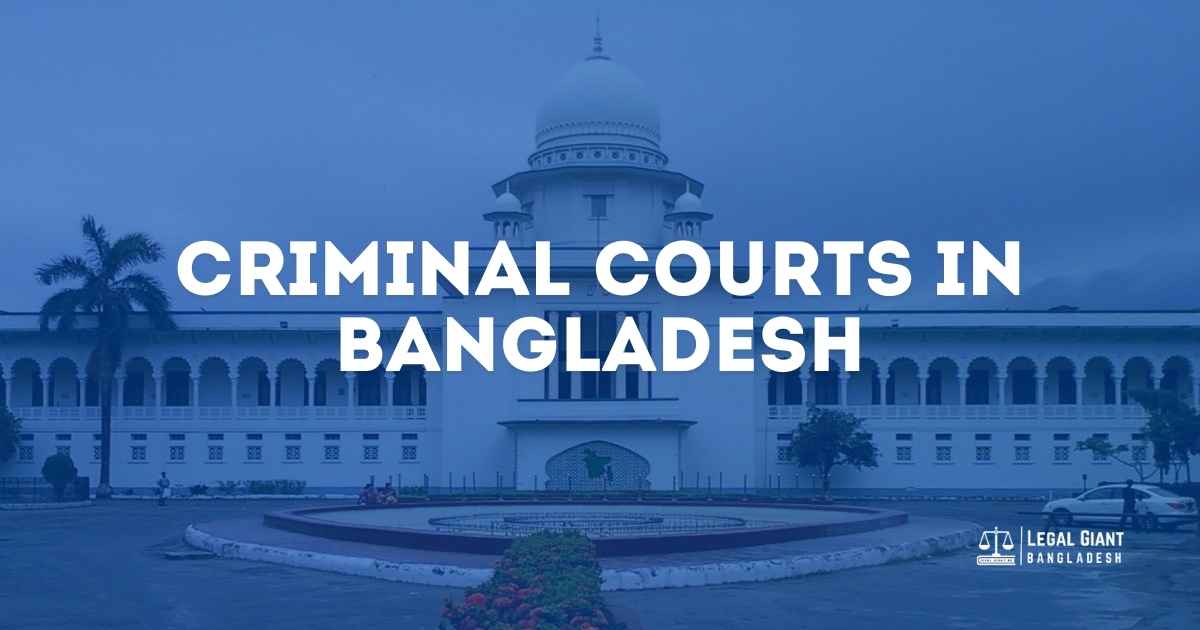
Introduction to Criminal Courts in Bangladesh

The criminal justice system of Bangladesh plays a pivotal role in maintaining law and order, protecting individual rights, and ensuring justice for all. At the heart of this system lies the structure of criminal courts, which handle cases related to criminal offenses. Understanding the criminal courts in Bangladesh is crucial for grasping how justice is administered in the country.

This article explores the organization, functions, and roles of criminal courts in Bangladesh, providing an in-depth understanding of their framework and procedures.

Criminal Courts in Bangladesh

Overview of the Criminal Justice System in Bangladesh

The criminal justice system in Bangladesh operates under the Constitution of Bangladesh and various statutory laws. It is designed to address violations of the law, maintain public order, and safeguard the rights of individuals.

The key components of this system include:

The criminal courts form the backbone of this system, as they ensure that laws are applied and interpreted fairly.

Legal Framework Governing Criminal Courts

The criminal courts in Bangladesh derive their authority from several key laws:

Together, these legal instruments establish the jurisdiction, hierarchy, and functions of criminal courts.

Hierarchy of Criminal Courts in Bangladesh

Criminal courts in Bangladesh are organized into a hierarchical structure, ensuring efficient administration and accessibility. This structure includes:

  1. The Supreme Court of Bangladesh
  2. Sessions Courts
  3. Magistrates’ Courts

The Supreme Court of Bangladesh

At the apex of the judiciary, the Supreme Court consists of two divisions:

Although the Supreme Court primarily deals with constitutional and civil cases, it also addresses critical criminal cases, especially on appeal or revision.

Sessions Courts

The Sessions Courts, often referred to as District Courts, are the highest criminal trial courts at the district level. Each district has a District and Sessions Judge who presides over the court.

Key features of Sessions Courts:

Sessions Courts play a critical role in ensuring justice for serious criminal matters.

Magistrates’ Courts

Magistrates’ Courts are the entry point for most criminal cases. They are categorized into three classes based on their jurisdiction and powers under the CrPC:

  1. Chief Judicial Magistrates (CJM): Responsible for managing the subordinate magistrates in their jurisdiction and trying cases with sentences of up to seven years.
  2. First-Class Magistrates: Handle cases involving punishments of up to five years imprisonment.
  3. Second-Class and Third-Class Magistrates: Deal with minor offenses with lesser punishments, such as fines or short-term imprisonment.

These courts are crucial for the speedy resolution of less severe criminal matters.

Jurisdiction of Criminal Courts

The jurisdiction of criminal courts in Bangladesh is defined by:

  1. Territorial Jurisdiction: Based on the location where the offense was committed or the accused resides.
  2. Subject-Matter Jurisdiction: Determined by the nature of the offense (e.g., petty theft vs. homicide).
  3. Pecuniary Jurisdiction: Applicable in cases involving fines or financial penalties.

Each court operates within its prescribed limits, ensuring that cases are addressed appropriately at different levels of the judicial system.

Types of Cases Handled by Criminal Courts

Criminal courts in Bangladesh deal with a wide range of cases, including:

Procedures in Criminal Courts

The criminal court process follows a structured procedure to ensure fairness and justice:

Filing a Case

A criminal case begins when:

Investigation

The police investigate the offense, collect evidence, and file a charge sheet or a final report with the magistrate.

Trial Process

The trial process includes:

  1. Framing of Charges: The court determines the charges against the accused.
  2. Evidence Presentation: Both prosecution and defense present evidence and examine witnesses.
  3. Arguments: Lawyers for both sides argue their cases.
  4. Judgment: The court delivers its verdict based on the evidence and legal principles.

Appeals and Revisions

If dissatisfied with the verdict, parties may appeal to higher courts or seek a revision of the case.

Challenges Faced by Criminal Courts in Bangladesh

Despite their significance, criminal courts face several challenges:

These challenges underscore the need for reforms to improve the effectiveness of the criminal courts.

Reforms and Innovations in Criminal Justice

To address these challenges, the government and judiciary have initiated several reforms:

Such reforms aim to make the criminal justice system more accessible, fair, and efficient.

Role of Criminal Courts in Upholding Justice

The criminal courts in Bangladesh are vital for:

Their role extends beyond punishment, contributing to the broader goals of justice and equity.

Conclusion

The criminal courts of Bangladesh are integral to the nation's judicial system, providing a mechanism for resolving disputes, ensuring accountability, and upholding the rule of law. While they face significant challenges, ongoing reforms offer hope for a more effective and equitable justice system. Understanding their structure and functions is essential for anyone seeking to engage with the legal landscape of Bangladesh.

Joinder of Charges Under CrPC

The concept of Joinder of Charges in the Code of Criminal Procedure, 1898 (CrPC) governs how multiple charges or offenses against an accused person can be combined in a single trial. This is covered primarily under Sections 233 to 240 of the CrPC in Bangladesh.

Joinder of Charges Under CrPC

Key Provisions on Joinder of Charges under CrPC:

  1. Section 233: Single Charge for Each Offense
    • As a general rule, for every distinct offense, there should be a separate charge, and each charge should be tried separately.
    • This ensures clarity and avoids confusion in the trial process.
  2. Section 234: Joinder of Charges for Similar Offenses
    • A person may be charged and tried for up to three offenses of the same kind committed within 12 months from the first offense.
    • Offenses are considered "of the same kind" if they are punishable under the same section of law or sections with similar provisions.
  3. Section 235: Trial of Multiple Offenses in One Transaction
    • If several offenses form part of the same transaction, they can be joined in one charge and tried together.
    • For instance, if theft and subsequent possession of stolen property occur as part of one act, both offenses may be tried jointly.
  4. Section 236: Uncertainty about Specific Offense
    • When it is unclear which specific offense has been committed, the accused can be charged with all possible offenses, and evidence will determine the applicable one.
  5. Section 239: Trial of Multiple Accused
    • Persons accused of committing different offenses within the same transaction may be tried together.
    • Similarly, individuals committing similar offenses in a concerted manner or with a common intention can also be jointly tried.
  6. Section 240: Framing of Charges
    • The magistrate must carefully frame charges when multiple offenses are included to ensure legal compliance with the joinder rules.

Practical Considerations:

Read More: Criminal Courts in Bangladesh

Notable Cases on Joinder of Charges:

In the case of K. Satwant Singh v. State Of Punjab (AIR 1960 SC 266), it was established that the rules about joining charges are not mandatory. Several landmark cases in Bangladesh and other jurisdictions have addressed Joinder of Charges under the Code of Criminal Procedure (CrPC). These cases highlight how the courts interpret and apply the relevant provisions, such as Sections 233 to 240 of the CrPC.

  1. Abdul Majid v. State (28 DLR 1981)
    • Facts: The accused was charged with multiple offenses arising out of a single transaction. The trial court combined all the charges in one trial.
    • Decision: The High Court upheld the trial court's decision, stating that offenses arising from the same transaction could be tried together under Section 235 of the CrPC. This ensures efficiency and prevents unnecessary duplication of proceedings.
  2. State v. Abdul Kuddus (1994 BLD 122)
    • Facts: The accused was charged with multiple thefts over a short period, and the charges were combined under Section 234.
    • Decision: The court ruled that joinder was valid because the offenses were of the same kind and occurred within 12 months.
  3. State v. Abu Bakar Siddique (41 DLR 123)
    • Facts: Charges included both theft and receiving stolen goods, allegedly from a continuous transaction.
    • Decision: The court emphasized that charges for offenses in the same transaction could be joined to avoid fragmented trials. However, the court stressed that the prosecution must establish the link between the offenses.
  4. Nazir Hossain v. State (45 DLR 1993)
    • Facts: The accused was tried for multiple offenses without clear evidence connecting the charges.
    • Decision: The court held that improper joinder of charges could result in prejudice to the accused. It reiterated that charges should only be joined when they meet the criteria under Sections 233–235.
  5. Mohammad Siddique v. State (AIR 1955 SC 196)
    • This case from India, based on similar CrPC provisions, dealt with multiple accused being tried together for conspiracy and related acts.
    • The court clarified that joinder is permissible when offenses are part of the same transaction or series of acts done in furtherance of a common intention.

Key Principles from These Cases:

If you have a specific case or query in mind, providing details will allow me to offer more tailored insights.

Rights of Prisoners in Bangladesh

Prisoners’ rights in Bangladesh are safeguarded through a combination of constitutional provisions, legislative frameworks, and international commitments. These protections aim to uphold human dignity and ensure fair treatment for all individuals in custody. Here’s an in-depth look at the rights of prisoners in Bangladesh.

Rights of Prisoners in Bangladesh

Constitutional Protections

Right to Life and Liberty

Under Article 32 of the Constitution of Bangladesh, prisoners retain their fundamental right to life and personal liberty. Detentions must follow due process and cannot be arbitrary. This ensures accountability in the justice system.

Prohibition of Torture

Article 35(5) explicitly bans torture, along with cruel, inhuman, or degrading treatment. This critical safeguard applies to all individuals in custody, protecting them from physical and mental abuse.

Equality Before Law

Article 27 ensures that prisoners, like all citizens, are equal before the law. They are entitled to equal protection without discrimination.

Access to Justice

Article 31 provides for the protection of law and mandates that prisoners must be treated according to legal standards. This includes the right to challenge illegal detention or unfair treatment.

Protections under Penal Code and Criminal Procedure Code

Prevention of Arbitrary Arrest and Detention

Constitutional safeguards, along with Sections 54 and 167 of the Code of Criminal Procedure, ensure judicial oversight by requiring detainees to be presented before a magistrate within 24 hours of arrest. This reduces the risk of arbitrary detention.

Prohibition of Solitary Confinement

Prolonged solitary confinement is discouraged, as it is deemed inhumane and violative of the Constitution and Penal Code.

Jail Code (Prison Manual) Provisions

The Jail Code outlines specific rights for prisoners to maintain basic living standards and dignity.

Basic Amenities

Prisoners are entitled to adequate food, clean drinking water, and sanitary living conditions to ensure basic health and safety.

Health Care

Access to medical facilities and routine health check-ups is a fundamental right for prisoners, as mandated by the Jail Code.

Legal Aid

The Jail Code guarantees prisoners the right to consult legal practitioners for their defense. This is essential to uphold fair trial rights.

Rehabilitation

To aid reintegration into society, the Jail Code promotes skill development, education, and other rehabilitation programs.

Rights of Special Categories

Women Prisoners

Special provisions are in place for pregnant women and those with children. These include prenatal and postnatal care, as well as arrangements for child welfare.

Juvenile Offenders

Juveniles are housed in separate facilities, with a focus on rehabilitation rather than punishment. These measures aim to ensure their eventual reintegration into society.

Right to Appeal and Parole

Convicted prisoners in Bangladesh have the right to:

International Standards

Bangladesh, as a party to the International Covenant on Civil and Political Rights (ICCPR), integrates international human rights standards into its domestic policies. These commitments emphasize humane treatment and non-discrimination in prisons.

Remedies for Violations of Prisoners’ Rights

If a prisoner’s rights are violated, the following remedies are available:

  1. File a Writ Petition: Under Article 102 of the Constitution, prisoners or their representatives can approach the courts.
  2. Human Rights Commission: Lodge complaints for intervention and investigation.
  3. Legal Aid Organizations: Seek assistance from NGOs or government-supported bodies that advocate for prisoners’ rights.

Prisoners’ rights are integral to upholding the rule of law and ensuring justice in Bangladesh. Despite challenges in enforcement, these legal protections offer a framework for dignity and fair treatment within the correctional system.