Introduction to Criminal Courts in Bangladesh
The criminal justice system of Bangladesh plays a pivotal role in maintaining law and order, protecting individual rights, and ensuring justice for all. At the heart of this system lies the structure of criminal courts, which handle cases related to criminal offenses. Understanding the criminal courts in Bangladesh is crucial for grasping how justice is administered in the country.
This article explores the organization, functions, and roles of criminal courts in Bangladesh, providing an in-depth understanding of their framework and procedures.
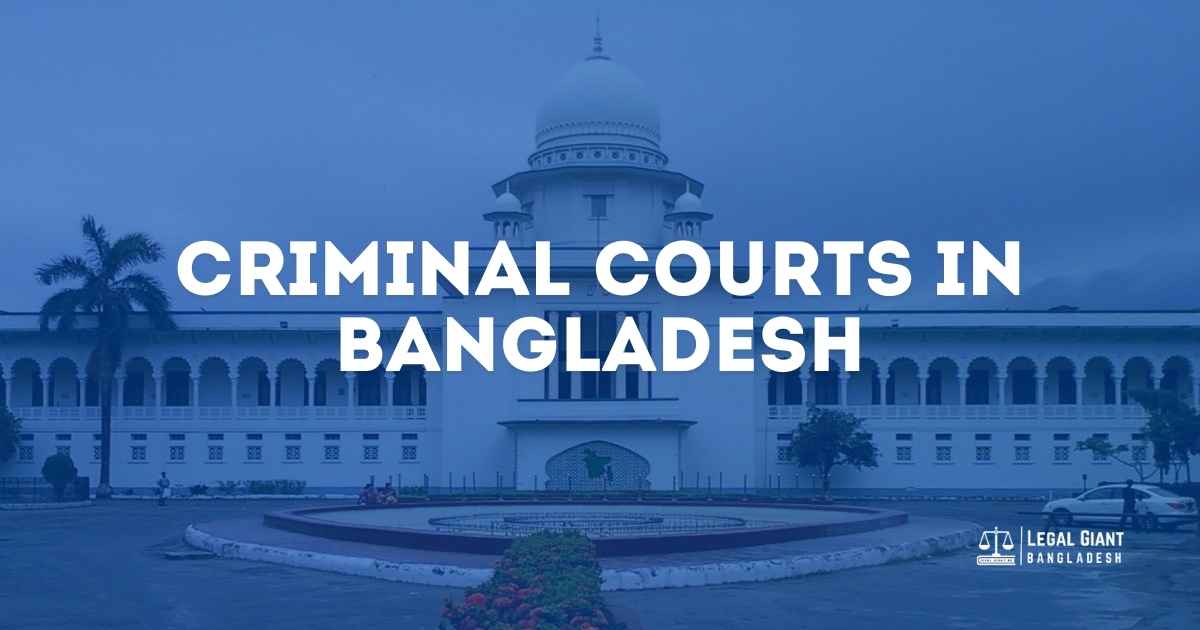
Overview of the Criminal Justice System in Bangladesh
The criminal justice system in Bangladesh operates under the Constitution of Bangladesh and various statutory laws. It is designed to address violations of the law, maintain public order, and safeguard the rights of individuals.
The key components of this system include:
- Law enforcement agencies: Responsible for investigating crimes and maintaining order.
- Criminal courts: Tasked with adjudicating cases and delivering justice.
- Correctional facilities: Where convicted individuals serve their sentences.
The criminal courts form the backbone of this system, as they ensure that laws are applied and interpreted fairly.
Legal Framework Governing Criminal Courts
The criminal courts in Bangladesh derive their authority from several key laws:
- The Code of Criminal Procedure, 1898 (CrPC): Provides the procedural guidelines for handling criminal cases.
- The Penal Code, 1860: Defines offenses and prescribes punishments.
- The Constitution of Bangladesh, 1972: Lays the foundation for the rule of law and judicial independence.
Together, these legal instruments establish the jurisdiction, hierarchy, and functions of criminal courts.
Hierarchy of Criminal Courts in Bangladesh
Criminal courts in Bangladesh are organized into a hierarchical structure, ensuring efficient administration and accessibility. This structure includes:
- The Supreme Court of Bangladesh
- Sessions Courts
- Magistrates’ Courts
The Supreme Court of Bangladesh
At the apex of the judiciary, the Supreme Court consists of two divisions:
- Appellate Division: Hears appeals from the High Court Division and interprets constitutional matters.
- High Court Division: Handles appeals, revisions, and writ petitions and has original jurisdiction over specific matters.
Although the Supreme Court primarily deals with constitutional and civil cases, it also addresses critical criminal cases, especially on appeal or revision.
Sessions Courts
The Sessions Courts, often referred to as District Courts, are the highest criminal trial courts at the district level. Each district has a District and Sessions Judge who presides over the court.
Key features of Sessions Courts:
- They try serious offenses such as murder, robbery, and rape, which carry heavy penalties, including life imprisonment or death.
- They have the authority to hear appeals from lower courts.
- The court may consist of additional judges, known as Additional or Assistant Sessions Judges, to handle the volume of cases.
Sessions Courts play a critical role in ensuring justice for serious criminal matters.
Magistrates’ Courts
Magistrates’ Courts are the entry point for most criminal cases. They are categorized into three classes based on their jurisdiction and powers under the CrPC:
- Chief Judicial Magistrates (CJM): Responsible for managing the subordinate magistrates in their jurisdiction and trying cases with sentences of up to seven years.
- First-Class Magistrates: Handle cases involving punishments of up to five years imprisonment.
- Second-Class and Third-Class Magistrates: Deal with minor offenses with lesser punishments, such as fines or short-term imprisonment.
These courts are crucial for the speedy resolution of less severe criminal matters.
Jurisdiction of Criminal Courts
The jurisdiction of criminal courts in Bangladesh is defined by:
- Territorial Jurisdiction: Based on the location where the offense was committed or the accused resides.
- Subject-Matter Jurisdiction: Determined by the nature of the offense (e.g., petty theft vs. homicide).
- Pecuniary Jurisdiction: Applicable in cases involving fines or financial penalties.
Each court operates within its prescribed limits, ensuring that cases are addressed appropriately at different levels of the judicial system.
Types of Cases Handled by Criminal Courts
Criminal courts in Bangladesh deal with a wide range of cases, including:
- Cognizable Offenses: Serious crimes such as murder or kidnapping, which require immediate police intervention.
- Non-Cognizable Offenses: Minor crimes like defamation or trespass, which necessitate a magistrate’s approval before investigation.
- Bailable and Non-Bailable Offenses: Depending on the offense, the accused may or may not be eligible for bail.
- Compoundable and Non-Compoundable Offenses: Certain offenses allow the parties to settle disputes amicably, while others mandate formal court proceedings.
Procedures in Criminal Courts
The criminal court process follows a structured procedure to ensure fairness and justice:
Filing a Case
A criminal case begins when:
- A First Information Report (FIR) is filed with the police for cognizable offenses.
- A complaint is lodged directly with a magistrate for non-cognizable offenses.
Investigation
The police investigate the offense, collect evidence, and file a charge sheet or a final report with the magistrate.
Trial Process
The trial process includes:
- Framing of Charges: The court determines the charges against the accused.
- Evidence Presentation: Both prosecution and defense present evidence and examine witnesses.
- Arguments: Lawyers for both sides argue their cases.
- Judgment: The court delivers its verdict based on the evidence and legal principles.
Appeals and Revisions
If dissatisfied with the verdict, parties may appeal to higher courts or seek a revision of the case.
Challenges Faced by Criminal Courts in Bangladesh
Despite their significance, criminal courts face several challenges:
- Backlog of Cases: Overburdened courts often result in delayed justice.
- Corruption: Instances of bribery and undue influence hinder the integrity of the system.
- Lack of Resources: Inadequate infrastructure and staffing affect court efficiency.
- Limited Awareness: Many citizens are unaware of their legal rights or the judicial process.
These challenges underscore the need for reforms to improve the effectiveness of the criminal courts.
Reforms and Innovations in Criminal Justice
To address these challenges, the government and judiciary have initiated several reforms:
- Digitization of Court Records: E-filing and case tracking systems enhance transparency and efficiency.
- Alternative Dispute Resolution (ADR): Encourages out-of-court settlements for minor offenses.
- Capacity Building: Training programs for judges and court staff improve their competency.
- Legal Aid Services: Provides free legal assistance to underprivileged individuals.
Such reforms aim to make the criminal justice system more accessible, fair, and efficient.
Role of Criminal Courts in Upholding Justice
The criminal courts in Bangladesh are vital for:
- Maintaining Public Order: By punishing offenders, courts deter crime and ensure social harmony.
- Protecting Rights: They uphold the rights of victims and the accused, ensuring a fair trial.
- Strengthening Rule of Law: A functional judiciary fosters trust in the legal system and promotes accountability.
Their role extends beyond punishment, contributing to the broader goals of justice and equity.
Conclusion
The criminal courts of Bangladesh are integral to the nation's judicial system, providing a mechanism for resolving disputes, ensuring accountability, and upholding the rule of law. While they face significant challenges, ongoing reforms offer hope for a more effective and equitable justice system. Understanding their structure and functions is essential for anyone seeking to engage with the legal landscape of Bangladesh.